

Key Takeaways
-
Biofilms are resilient microbial communities that can impair water treatment processes.
-
Innovative strategies, including the use of beneficial biofilms and advanced materials, are being developed to manage biofilm-related challenges.
-
Understanding biofilm dynamics is crucial for improving water treatment efficiency and safety.
Table of Contents
-
Understanding Biofilms
-
Challenges Posed by Biofilms in Water Treatment
-
Beneficial Biofilms as a Solution
-
Advanced Materials to Combat Biofilms
-
Role of Disinfectants in Biofilm Control
-
Monitoring and Detection of Biofilms
-
Future Directions in Biofilm Management
-
Conclusion
Biofilms are intricate assemblies of microorganisms that thrive in water treatment systems, where they create significant operational and health challenges. Their tendency to adhere to surfaces and form protective layers can impair system performance and endanger water quality. As the demand for effective solutions grows, industry leaders and researchers are looking toward emerging technologies for answers. In California and across the globe, practical biofilm control solutions California are playing a pivotal role in modernizing water treatment infrastructure.
The complexity of biofilms makes them uniquely resilient to traditional cleaning and disinfection processes. Persistent biofilm problems often lead to increased maintenance costs, reduced efficiency of water filtration systems, and even the possibility of harmful pathogens entering drinking water supplies. Developing a deeper understanding of biofilm formation and applying innovative strategies is critical for ensuring reliable and safe water distribution.
Advances in biological engineering, materials science, and sensor technologies offer promising pathways for both managing harmful biofilms and promoting beneficial microbial communities. These methods aim to optimize system longevity, reduce resource waste, and enhance public health outcomes. In what follows, you will find an in-depth overview of biofilm dynamics, the challenges they present, and the cutting-edge approaches shaping the future of water treatment.
With increasing recognition of biofilm impacts, organizations worldwide are working to implement interdisciplinary solutions that transcend conventional methods. By merging biological insight with novel engineering, water treatment professionals are better equipped to mitigate the risks associated with biofilm proliferation.
Understanding Biofilms
Biofilms are communities of microorganisms (bacteria, fungi, and algae) that stick to surfaces and become encased in an extracellular matrix of their own making. This slimy layer shields them from the environment, increasing their resistance to disinfectants, antibiotics, and other efforts to eradicate them. In the setting of water treatment systems, biofilms typically form on the interior of pipes, storage tanks, and filters. Their presence accounts for persistent contamination, corrosion, and the gradual decline in system efficiency.
The evolution of biofilms is a dynamic process. Microorganisms first adhere to a surface before multiplying and secreting sticky substances that anchor the community firmly in place. This matrix traps nutrients and moisture, sustaining a diverse ecosystem that is difficult to dislodge. The complexity and resilience of these microbial assemblages pose unique challenges for water utilities and public health agencies. For a scientific overview of biofilms and their significance, consult the coverage provided by Environmental Science & Technology.
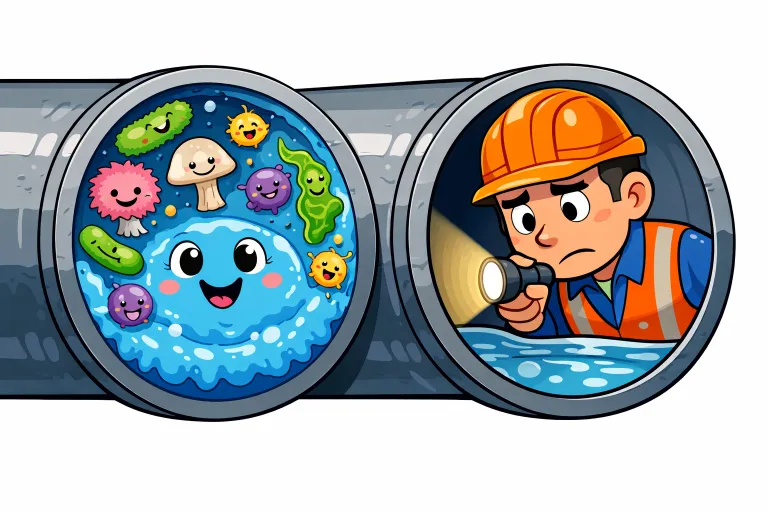
Challenges Posed by Biofilms in Water Treatment
When biofilms develop in water treatment environments, a range of operational and health hazards arises. Some of the most critical concerns include:
-
Corrosion: Biofilms foster an environment where corrosive reactions accelerate, particularly on metal surfaces. This leads to weakened infrastructure and expensive repairs.
-
Reduced Flow Efficiency: As biofilms accumulate inside pipes and filters, they create obstructions that lower water flow rates and raise pumping costs due to higher energy demands.
-
Health Risks: The matrix of biofilms often shelters opportunistic and pathogenic microorganisms, which can end up in processed water and threaten consumer safety.
These persistent challenges highlight the need for a holistic approach to biofilm detection, control, and prevention within the water treatment sector. Regular maintenance and proactive strategies are essential for minimizing their disruptive influence.
For further reading on the risks biofilms pose in water systems, authoritative resources like the U.S. Environmental Protection Agency offer valuable insights.
Beneficial Biofilms as a Solution
While problematic biofilms are a concern, innovative research suggests that not all biofilms are malicious. Beneficial biofilms can be engineered to outcompete or inhibit the formation of harmful biofilms. For example, researchers at Penn State University have developed biofilm-modified reverse osmosis membranes. These engineered biofilms crowd out the microorganisms responsible for fouling, extending the lifespan of membranes and reducing maintenance costs. These advancements signal a shift from elimination to intelligent management, where harnessing the power of beneficial microorganisms can actually enhance system performance.
Advanced Materials to Combat Biofilms
Breakthroughs in materials science offer new hope in the fight against biofilms. Researchers at Osaka Metropolitan University have tested foamed plastic carriers with textured surfaces in moving bed biofilm reactors (MBBRs) for wastewater treatment. These carriers, when packed with waste biomass, foster the rapid establishment of beneficial microbial communities. This not only accelerates the treatment process but also demonstrates an eco-friendly solution by repurposing waste. Innovations like these underscore the role of material engineering in combating biofouling and increasing reactor efficiency.
Role of Disinfectants in Biofilm Control
Disinfectants remain fundamental to biofilm management, yet their efficacy can be inconsistent. Factors such as the density and maturity of the biofilm and the chemical concentration used significantly impact results. Research reveals that optimized chlorine dosing regimes can substantially inhibit biofilm regrowth in distribution systems. Careful calibration is needed to ensure effective disinfection while minimizing unintended environmental impacts or byproduct formation.
Monitoring and Detection of Biofilms
Timely and precise detection is critical for successful biofilm management. Modern sensors and imaging techniques provide real-time monitoring capabilities, allowing maintenance teams to identify biofilm hotspots and intervene before significant issues develop. Advanced imaging, such as confocal laser scanning microscopy, reveals the structure and growth of biofilms, while biosensors detect shifts in microbial activity. These technological innovations mark a significant leap in proactive water infrastructure management.
Future Directions in Biofilm Management
Looking ahead, interdisciplinary collaboration is driving novel strategies for sustainable biofilm control. Research is ongoing in the use of natural antimicrobial agents, the integration of nanotechnology to disrupt microbial adhesion, and the creation of smart surfaces that resist colonization. As the principles of green chemistry and circular economy become more deeply embedded in water treatment, the future promises safer, more efficient systems.
Conclusion
Managing biofilms is a persistent challenge, but advancements in biological understanding, engineered materials, and sensor technology are providing new avenues for effective control. By embracing innovative strategies and robust monitoring practices, water treatment operators can safeguard public health and ensure the longevity of essential infrastructure.
