
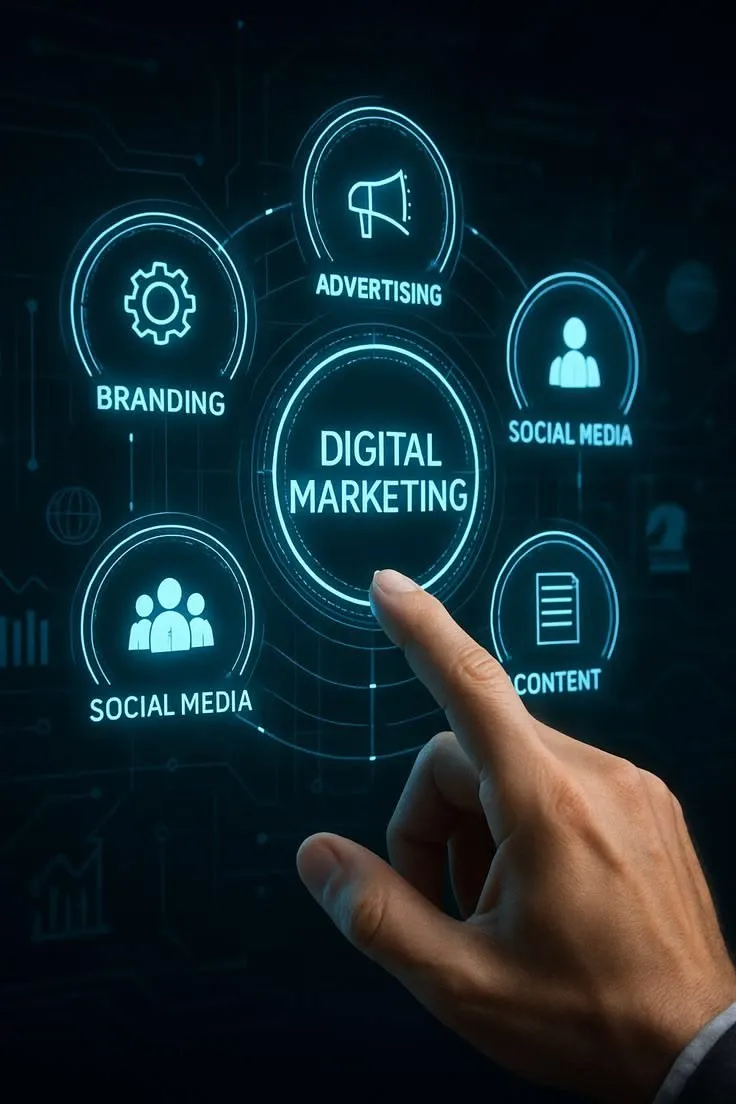
Digital marketing can become fragmented very quickly. One team manages paid advertising, another creates social content, someone handles SEO, and the website is updated only when something breaks. Each channel may appear busy, yet the business may still struggle to explain which activity is creating meaningful revenue or qualified enquiries.
Integrated marketing begins by connecting channels to business outcomes rather than treating traffic, impressions and follower counts as the final objective.
Start With the Business Goal
A marketing plan should begin with what the organisation wants to improve. That might be ecommerce revenue, consultation bookings, qualified B2B leads, repeat purchases or expansion into a new market. Once the objective is clear, teams can decide which channels deserve investment.
Starting with “we need more social media” or “we need to spend more on Google Ads” reverses the process. A channel is only a tool.
A Practical Ecommerce Example
Consider a Malaysian homeware retailer investing heavily in paid search. Website traffic grows for three consecutive months, but online sales remain almost unchanged. The marketing team initially assumes it needs more visitors. A closer review reveals a different problem. Most paid traffic arrives on mobile devices, but product pages load slowly, shipping information is difficult to find and checkout requires too many steps.
Instead of simply increasing its advertising budget, the retailer improves the mobile product experience, clarifies delivery information and simplifies checkout.
Existing traffic then has a better opportunity to convert. The example shows why acquisition and conversion cannot be managed separately.
Give Each Channel a Defined Role
SEO can capture existing demand. Paid search can provide faster visibility for commercial searches. Social advertising may introduce the brand to people who are not actively searching, while email can support repeat purchases or longer sales journeys.
Businesses working with an integrated digital marketing team in Malaysia should expect these channels to support one another rather than operate as completely separate projects. The right mix depends on the business model. A professional service with a six-month sales cycle should not use the same channel strategy as an ecommerce store selling inexpensive consumer products.
The Website Connects the Strategy
Marketing campaigns cannot compensate indefinitely for a poor website. If an advertisement promises one thing and the landing page says something different, the campaign creates friction.
The same applies when organic visitors reach a service page with no explanation of what happens next. A useful landing page should provide the information necessary at that stage of the customer journey and make the next action clear.
Content Should Work Across Multiple Channels
A strong piece of content can provide value beyond SEO. A detailed guide may attract organic search traffic, support a sales conversation, become part of an email campaign and provide material for social promotion. For example, a B2B company could turn a detailed industry guide into several shorter posts, a webinar discussion and a sales follow-up resource.
Content becomes more efficient when it begins with a genuine customer problem rather than being produced only to fill a publishing calendar.
Search Optimisation Still Needs Specialist Attention
An integrated strategy does not mean every channel should be treated generically. Organic visibility still requires dedicated work involving technical accessibility, search intent, content structure and internal linking. Businesses may therefore combine wider marketing activity with specialist SEO support suited to the Malaysian market. The important point is that SEO findings should influence other channels where useful.
If organic search data shows customers repeatedly looking for a particular service feature, paid advertising and landing-page copy may benefit from the same insight.
Use Paid Media as a Learning Tool
Paid campaigns can provide feedback relatively quickly. Search-term data, ad performance and landing-page behaviour can reveal which offers or messages attract stronger interest. Suppose one advertisement emphasising fast implementation consistently generates higher-quality leads than another focused on price. That insight can inform future website copy, content and sales messaging. Paid and organic marketing become stronger when insights move between teams.
Measure the Customer Journey
Customers rarely interact with a business through only one channel. Someone might first see a social advertisement, later search the company name, read an article and eventually return directly to enquire. Last-click reporting alone can hide much of this journey. Businesses should examine conversion rates, lead quality, customer acquisition cost and the contribution of important landing pages alongside traffic measures.
Conclusion
Integrated digital marketing works when channels support one another and remain connected to commercial goals. Traffic acquisition, website experience, content, SEO and conversion measurement all contribute to the same customer journey.
For Malaysian businesses, measurable growth is rarely achieved by simply appearing on more platforms. A stronger strategy focuses investment on the channels that suit the business, improves what happens after the click and uses evidence to guide the next decision.
